

Artificial intelligence is changing how we work, and soft skills are becoming more important than ever. Think about a future where emotional intelligence and adaptability matter just as much as technical skills. A recent study found that 92% of executives feel soft skills are as important, if not more so, than technical skills. In this article, we'll look at how these key skills will shape the workforce in an AI-driven world. We'll talk about why soft skills matter and share ways to develop them. This will help you keep your career on track. Let's dive in and see how soft skills can make a difference in the age of AI.
Summary: This article discusses the importance of soft skills in an AI-driven future, highlighting key skills for the workforce, strategies for their development, and examples of their application in real-world scenarios. It also explores how cultivating these skills can future-proof careers.
The Importance of Soft Skills in an AI-Driven Future
The Critical Role of Soft Skills in the Future Workforce
As AI continues to advance, soft skills are becoming just as critical as technical expertise. While AI excels at data analysis and number crunching, it lacks the human touch—creativity, empathy, and judgment are uniquely human traits that drive innovation and foster collaboration.
Consider a manager skilled in understanding people. They can lead their team through AI-driven changes by effectively managing conflicts, building trust, and facilitating adaptation—tasks that AI simply cannot accomplish (Proaction International Blog).
Critical thinking is essential for interpreting AI outcomes and making informed decisions. Skills like emotional intelligence, adaptability, creativity, and effective communication ensure humans remain integral as AI automates mundane tasks. These abilities help navigate complex social interactions and maintain teamwork, areas where AI falls short (Horton International).
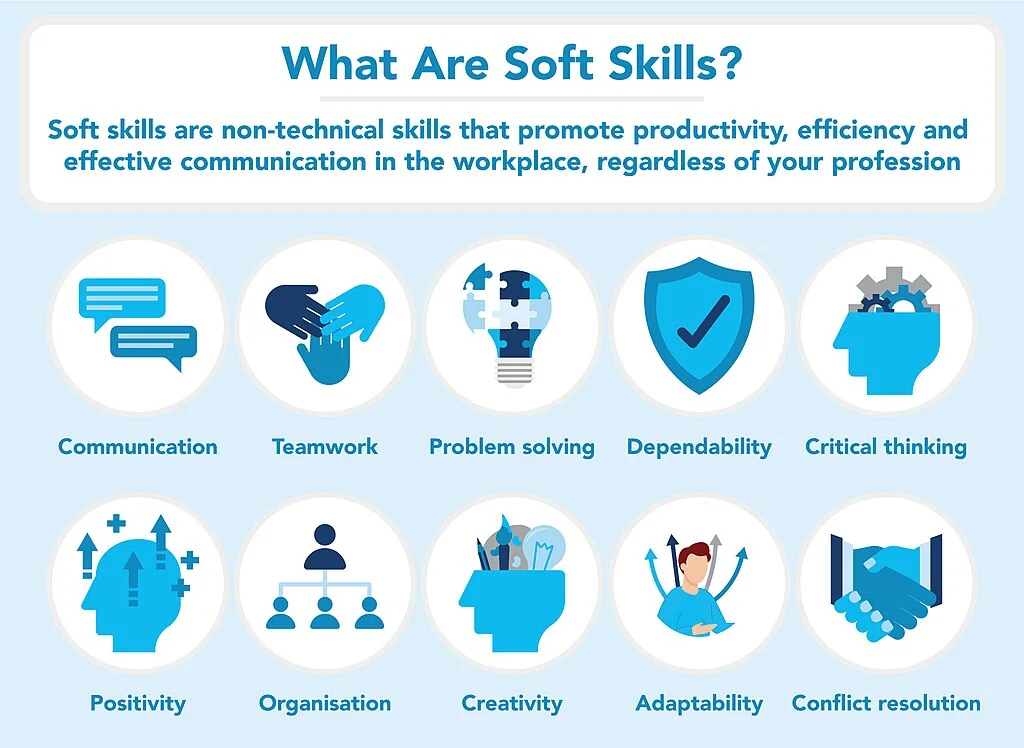
Moreover, human strengths such as empathy, creativity, and meaningful dialogue are irreplaceable by AI (Sii Polska Blog).
Enhancing Human-Machine Collaboration with Soft Skills
Soft skills play a pivotal role in facilitating human-machine collaboration. Effective communication, conflict management, and teamwork are crucial to integrating AI without disrupting human interactions. Leaders with emotional intelligence can guide their teams through AI transitions, ensuring a productive and harmonious work environment (Proaction International Blog).
These skills are also essential for addressing the ethical challenges posed by AI, such as bias and data privacy. They promote ethics, critical thinking, and transparency in leadership. Skills like curiosity, resilience, and the ability to view situations from multiple perspectives are vital for making ethical decisions in an AI-driven world (Solutions Review).

However, many organizations lack a robust framework for assessing or enhancing these skills within their teams, highlighting a significant gap in the age of AI (Solutions Review).
In summary, as AI takes on technical tasks, soft skills are becoming indispensable for fostering innovation, making ethical decisions, and ensuring smooth teamwork. They are crucial for the responsible use of AI and effective human-machine collaboration.
Essential Soft Skills for the Future Workforce
Future-Proof Critical Thinking and Problem Solving
In today's fast-paced work environment, critical thinking and problem-solving are must-have skills. These abilities help us make better decisions, improve processes, and handle uncertainty by mixing logic with creativity. By seeing obstacles as opportunities for improvement, these skills bring clarity and direction, which are key for success.
As automation becomes more common, keeping your analytical skills sharp and being able to think up creative solutions is vital. Analytical thinking and innovation are crucial for:
- Understanding complex data
- Spotting trends
- Developing effective solutions in any industry

For example, a project manager uses critical thinking to assess project risks and cleverly resolve scheduling issues, ensuring everything stays on track even when surprises pop up.
Emotional Intelligence and Adaptability in the Future Workforce
Emotional intelligence (EQ) is set to be the top soft skill by 2025. It helps leaders build strong relationships, inspire teams, handle stress, and resolve conflicts with empathy. Improving EQ involves:
- Working on empathy
- Enhancing communication
- Increasing awareness of others
These elements are essential for managing stress and uncertainty in challenging work situations. Being resilient, flexible, and adaptable allows you to quickly adjust to changes, learn new skills on the go, and maintain smooth operations during tough times.
Embracing a growth mindset and lifelong learning also boosts adaptability and emotional intelligence. For instance, an employee can demonstrate adaptability by quickly learning new software during a company transition while easing team stress through understanding communication.
Communication and Collaboration in a Globalized World
Good communication and collaboration are key for teamwork, especially in remote or hybrid setups. These skills help you:
- Express yourself clearly
- Listen actively
- Work towards common goals
As flexible work and the gig economy grow, skills like persuasion, teamwork, and interpersonal communication become even more important. Being culturally aware also enhances communication and collaboration, enabling teams to work well together across different backgrounds and global markets.
For example, a remote team can use these skills to coordinate effectively across time zones and cultural differences, hitting project milestones smoothly.
Strategies for Cultivating Soft Skills
Organizational Approaches for the Future of Soft Skills Development
Organizations increasingly recognize the importance of soft skills in enhancing employee engagement, productivity, and retention. To maximize these efforts, many companies utilize behavioral profiling tools like PRISM. These tools assist in crafting personalized training programs that include:
- Communication exercises
- Problem-solving scenarios
- Leadership role-playing
- Resilience training

By setting clear goals, organizations can effectively track progress, leading to tangible improvements in teamwork, negotiation, and leadership.
Prominent companies such as Amazon, Spotify, and Google place significant emphasis on soft skills like coaching, communication, collaboration, and influence. These skills are crucial for career advancement and effective management, particularly in complex, cross-functional, and remote work environments where social skills are essential for aligning goals, sharing knowledge, and reducing friction.
Mentorship and Coaching for Future Soft Skills
Mentorship and coaching play a vital role in developing soft skills. By pairing newer employees with seasoned mentors, organizations facilitate the exchange of knowledge and skills, with a focus on communication, problem-solving, and leadership. Mentors provide guidance and support, helping mentees navigate workplace challenges and better understand interpersonal dynamics.
Workshops and Interactive Training for Future Skills
Workshops and interactive training provide hands-on experience in developing soft skills. These sessions, featuring role-playing exercises and real-world simulations, aim to enhance skills like emotional intelligence and teamwork. This interactive approach fosters better collaboration and camaraderie among team members.
Feedback and Performance Reviews for Soft Skills Growth
Regular feedback and performance reviews are essential for soft skills development. Constructive feedback enables employees to identify their strengths and areas for improvement. Utilizing 360-degree feedback systems, which gather input from peers, subordinates, and supervisors, provides a comprehensive view of an employee's interpersonal effectiveness.
Integrating Soft Skills Training into Future Employee Development
Integrating soft skills training into employee development plans is crucial, as these skills are expected to become even more important by 2025 and beyond. Ongoing learning, upskilling, and reskilling programs are vital to keeping pace with the rapidly changing skills demand. Key soft skills include:
- Communication
- Collaboration
- Emotional intelligence
- Cultural awareness
- Critical thinking
- Problem-solving

Blended Learning for Future Soft Skills
Blended learning combines online courses with in-person training, offering both flexibility and accessibility. Platforms like Coursera and LinkedIn Learning offer courses on communication, leadership, and emotional intelligence, allowing employees to learn at their own pace while in-person sessions provide practical application opportunities.
Incorporating Soft Skills into Future Onboarding
Including soft skills training in the onboarding process establishes the foundation for a company’s culture and expectations. New hires participate in workshops and seminars that emphasize the importance of soft skills, ensuring they understand their role in fostering a collaborative and inclusive work environment. This early focus helps new employees integrate smoothly into teams and align with organizational values.
Continuous Learning for Future Soft Skills Development
Organizations committed to continuous learning ensure that soft skills training is ongoing. By offering regular workshops, seminars, and e-learning opportunities, companies encourage employees to continuously enhance their skills. This dedication to lifelong learning supports career growth and helps maintain a competitive edge in the rapidly changing workplace.
Case Studies and Real-World Examples
Successful Integration of AI and Soft Skills in the Future Workforce
Amazon is making significant strides in enhancing both technical and soft skills through its Upskilling 2025 initiative. They've committed over $1 billion to employee programs. The primary objective is to equip their workforce with a blend of tech expertise and human abilities, ensuring they are prepared to tackle future challenges effectively.
Spotify employs an innovative 'squad' model where engineers operate within independent, cross-functional teams. This structure emphasizes collaboration and communication, encouraging employees to integrate design, product, and marketing efforts. As a result, this approach fosters AI-driven innovation.
Increasingly, companies are advised to hire based on potential, focusing on core soft skills such as adaptability, problem-solving, and communication, rather than solely on technical expertise. It is crucial to begin developing these skills early, as they are challenging to acquire later on.
In AI-enhanced workplaces, emotional intelligence becomes a pivotal asset. It aids in managing relationships, leading teams, and resolving conflicts, complementing technical skills adeptly.
Future-Proofing Careers with Soft Skills
Personalized Skill Roadmaps for the Future of Soft Skills
In today's fast-paced job market, having a personalized skill roadmap is essential. Consider it a custom plan designed to help you acquire the skills necessary to stay competitive. Platforms such as Degreed and Skillsoft leverage AI and data analytics to provide tailored advice. They assess your current activities alongside industry trends to recommend courses and resources that address your skill gaps. This approach ensures you gain both the technical expertise and the soft skills crucial in your field.
The Importance of Soft Skills
Soft skills are becoming increasingly important. According to Deloitte, by 2030, 63% of jobs will require them. Skills like communication, adaptability, and emotional intelligence are key to career advancement. Platforms like LinkedIn Learning and Coursera offer learning paths tailored to your career objectives and current skill level.
By incorporating these personalized roadmaps into your career development plan, you ensure your skills remain relevant and up-to-date in our rapidly evolving job landscape.
FAQ Section
Effective Training for Essential Soft Skills in the AI Future
To train employees in essential soft skills, companies should focus on areas like emotional intelligence, leadership, and communication. These skills are crucial for building stronger, well-rounded teams. One effective approach is through microlearning, which offers short, bite-sized courses. This method is flexible and helps busy employees retain information better.
Key Strategies:
- Blend Technical and Human Skills: Combine technical know-how with human skills such as problem-solving, teamwork, and leadership.
- Invest in Creativity and Agility: Prioritize creativity, learning agility, critical thinking, and leadership to stand out in a tech-heavy world.
- Utilize Microlearning Platforms: Implement platforms that provide short courses on emotional intelligence and leadership skills.
- Incorporate Workshops: Add workshops where employees can practice these skills in team settings.
- Leverage Technology: Use virtual coaching and online training tools for personalized, on-demand learning.
- Encourage Cross-Functional Projects: Promote daily curiosity and provide constructive feedback to boost learning agility and adaptability.
Top Soft Skills for Success in an AI-Driven Workforce
In an AI-driven workforce, certain soft skills will become increasingly important. These include emotional intelligence, leadership, communication, critical thinking, creativity, and learning agility. As AI takes over routine tasks, human skills like empathy, problem-solving, and adaptability gain prominence.
Valued Soft Skills:
- Emotional Intelligence: Essential for managing relationships, leading teams, and resolving conflicts.
- Critical Thinking and Communication: Regarded as power skills as AI progresses.
- Creativity and Learning Agility: Distinguish humans from machines, which cannot replicate human thought processes.
- Leadership: Crucial for leading hybrid teams and working effectively with AI tools.
Measuring the Impact of Soft Skills on Team Performance
Organizations can measure the impact of soft skills on team performance through various methods. Tracking improvements in collaboration, problem-solving, and leadership can demonstrate the effect of soft skills on team dynamics.
Measurement Techniques:
- Workforce Intelligence Platforms: Identify skill gaps and measure how soft skills contribute to team success in AI-integrated settings.
- Surveys and Feedback Mechanisms: Focus on communication, empathy, and leadership to provide qualitative data on soft skills effectiveness.
- Analytics Platforms: Track key skills like empathy, communication, and leadership to gain insights into skill gaps and progress.
By monitoring these metrics, organizations can understand the broader impact of soft skills on their workforce, ensuring they remain competitive and effective in an AI-driven world.
In short, the future of soft skills will depend on how well organizations adapt to training and measuring these key competencies.