

AI isn't just a buzzword in leadership training anymore; it's becoming a real part of it. Right now, about 47% of companies are already using AI to boost their leadership programs. That's a big number, and it's only going to grow. AI is helping us understand what makes a good leader and how to train them better. It can make learning more efficient and even tailor it to fit someone’s personal strengths and weaknesses. But we can't forget about the ethics and the human side of things. As we explore how AI and leadership training work together, let's see what the future might bring for this exciting mix.
Summary: Dieser Artikel beschreibt die Rolle von KI bei der Entwicklung von Führungsfähigkeiten, einschließlich der verschiedenen Entwicklungsstadien, Anwendungen, ethischen Überlegungen und zukünftigen Perspektiven. Er bietet auch Antworten auf häufig gestellte Fragen zu KI in der Führungskräfteentwicklung.
Understanding AI in Leadership Skills Development
AI's Impact on Modern Leadership Skills
AI is becoming an integral component in the evolution of leadership. It enhances essential skills such as vision, foresight, and critical thinking, while also aiding in long-term planning. Tools like generative AI are utilized in simulations, AI coaches, and learning companions, accelerating and advancing training processes.
Embracing an AI-first leadership style necessitates a reevaluation of how leaders interact with AI. This involves integrating technological capabilities with leadership objectives and fostering a culture that embraces AI. Leaders now have access to tools that facilitate data-driven decision-making, strategic planning, risk management, and team optimization.
This transformation demands new leadership styles that emphasize ethics and continuous learning, ensuring AI enhances rather than replaces human qualities. A midlevel leader exemplifying AI-first leadership integrates AI into team workflows, aligning AI's strengths with organizational goals.
Essential AI Knowledge for Leadership Success
To effectively leverage AI, leaders must understand its fundamentals, including the capabilities and limitations of AI tools. Adopting an AI-first mindset involves learning to collaborate with AI, balancing technological efficiency with human creativity.
Leaders should refine their critical thinking skills to evaluate AI tools and address challenges such as bias, over-reliance, and misinformation. Responsible AI usage requires cultural awareness, inclusivity, and a commitment to ethical AI practices. Participating in a leadership development program that includes AI literacy and ethical AI workshops can equip leaders with these competencies.

This ensures informed decision-making regarding AI, aligning it with organizational goals and values.
AI-Driven Leadership Development Stages
Cultivating an AI-First Leadership Mindset
Thinking "AI-first" isn't just about adding tech to what we already do. It's about leaders rethinking how humans and AI can work together. This mindset is key to truly harnessing AI's power and aligning tech capabilities with a company's goals.
Leaders should cultivate a culture where AI enhances human creativity, decision-making, and innovation. Leadership programs now emphasize personal growth, which is crucial for genuine transformation and supports an AI-first way of thinking.
AI coaching democratizes leadership development, enabling leaders at all levels to adopt an AI-first mindset through scalable and consistent methods. For instance, midlevel managers can utilize AI coaching platforms to practice real-life leadership scenarios, boosting their confidence in integrating AI tools into their team's workflows and decision-making.

Developing AI-Specific Leadership Skills
Mastering Technical Proficiency in AI
Leaders need a foundational understanding of AI to effectively lead AI-driven projects and drive change. This includes familiarizing themselves with concepts like machine learning, natural language processing, and data analytics.
AI-driven leadership coaching platforms offer personalized development that swiftly addresses skill gaps and fosters continuous learning in safe environments. As AI tools evolve, leadership roles transform, turning leaders into trainers of AI systems rather than mere users. This shift necessitates developing new skills and moving away from traditional top-down methods, empowering everyone to build AI-specific skills. Leadership programs often employ AI simulations and real-time feedback to help new leaders master AI tools and data-driven decision-making.

Prioritizing Ethical AI Leadership
Using AI insights responsibly requires ethical guidelines, transparency, and a focus on bias and data privacy to maintain trust and user acceptance. Leaders need to establish frameworks that address issues like bias, privacy, and security, promoting the responsible use of AI. By focusing on ethics, leaders can build trust with stakeholders and mitigate potential AI risks.
Strategic Vision for AI Integration
Leaders should align AI efforts with company goals, identifying where AI can add the most value. A strategic plan should detail specific AI projects, resource allocation, and expected outcomes. This ensures AI efforts are purposeful and contribute to the company's long-term success. Leaders are transitioning to roles that supervise and train AI systems, using insights to continually refine processes and strategies.
Leading with AI Insights
Leveraging Data-Driven Decision Making
Effective AI-driven leadership involves leveraging AI-generated data to guide strategic decisions and enhance team performance. By employing advanced analytics and predictive modeling, leaders can identify trends, optimize processes, and anticipate challenges. This data-focused approach enables leaders to make evidence-based decisions aligned with company goals.
Enhancing Team Collaboration with AI
AI can bolster team collaboration by streamlining communication and automating routine tasks. Leaders should foster a culture that embraces AI’s capacity to enhance human judgment and creativity, driving innovation and competitive advantage. AI-powered platforms allow leaders to practice key conversations and leadership skills through realistic simulations, enhancing readiness and confidence.
Embracing Continuous Learning and Adaptation
Remaining competitive in the AI landscape requires continuous learning and adaptation. Leaders need to stay abreast of the latest AI advancements and trends. By staying adaptable, leaders can ensure their organizations remain competitive and poised for new opportunities and challenges.
For more insights on AI-first leadership and AI coaching, check out these resources.
AI-Powered Applications in Leadership Development
AI-Driven Personalized Leadership Development Plans
AI is revolutionizing leadership development by crafting customized, data-driven programs tailored for each individual. With AI, organizations can create leadership plans that enhance members' skills for leadership roles. This involves honing abilities in:
- Strategic thinking
- Vision and foresight
- Setting long-term goals
Platforms like Cloverleaf and LeadX provide real-time feedback and personalized learning tips to enhance leadership learning.
They analyze individual performance feedback to identify strengths and areas for improvement, creating tailored learning plans and specific feedback for leaders and their teams. This approach ensures leaders receive the training necessary to sharpen their skills effectively.
AI Simulations Enhancing Leadership Training
Generative AI tools are increasingly popular in leadership training simulations, acting as assistants for coaches and advisors to deliver interactive training. These AI simulations allow leaders to practice decision-making and critical thinking in realistic scenarios, enhancing their ability to build vision and set goals.
For example, AI-based simulations can train project leaders in emotional intelligence through scenario-based exercises on empathy, mindfulness, and conflict management, with real-time feedback using facial expression analysis. Companies like Mursion and Rehearsal leverage AI to create these simulations. These tools offer dynamic scenarios where leaders confront complex challenges, receiving instant AI feedback on their decisions.
Reducing Leadership Bias and Inefficiencies with AI
AI analytics offer more objective insights into leadership development efforts, surpassing traditional performance reviews. However, there is a concern that AI might reinforce biases or lead to over-reliance. Thus, integrating AI insights with human judgment is crucial for maintaining fairness and accountability.
Leading organizations utilize AI to enhance engagement, scalability, and data-driven decision-making in leadership development, addressing inefficiencies in traditional methods.

Tools like Pymetrics and HireVue use machine learning to evaluate potential leaders based on their skills and aptitudes, thereby reducing human biases. By minimizing biases and inefficiencies, AI makes leadership development more equitable and effective, fostering diverse and capable leaders.
Ethical Considerations and Human Element
Ethical Leadership Practices in AI Integration
Incorporating AI into leadership necessitates a steadfast commitment to ethical values such as fairness, accountability, transparency, and inclusivity. This means ensuring AI-driven decisions align with both organizational principles and societal expectations, thereby promoting responsible technology use.
A well-defined ethical AI framework with established principles is crucial. It ensures fairness and transparency while safeguarding user privacy. Regular ethical impact assessments are vital to identify and mitigate risks, particularly those affecting marginalized groups.
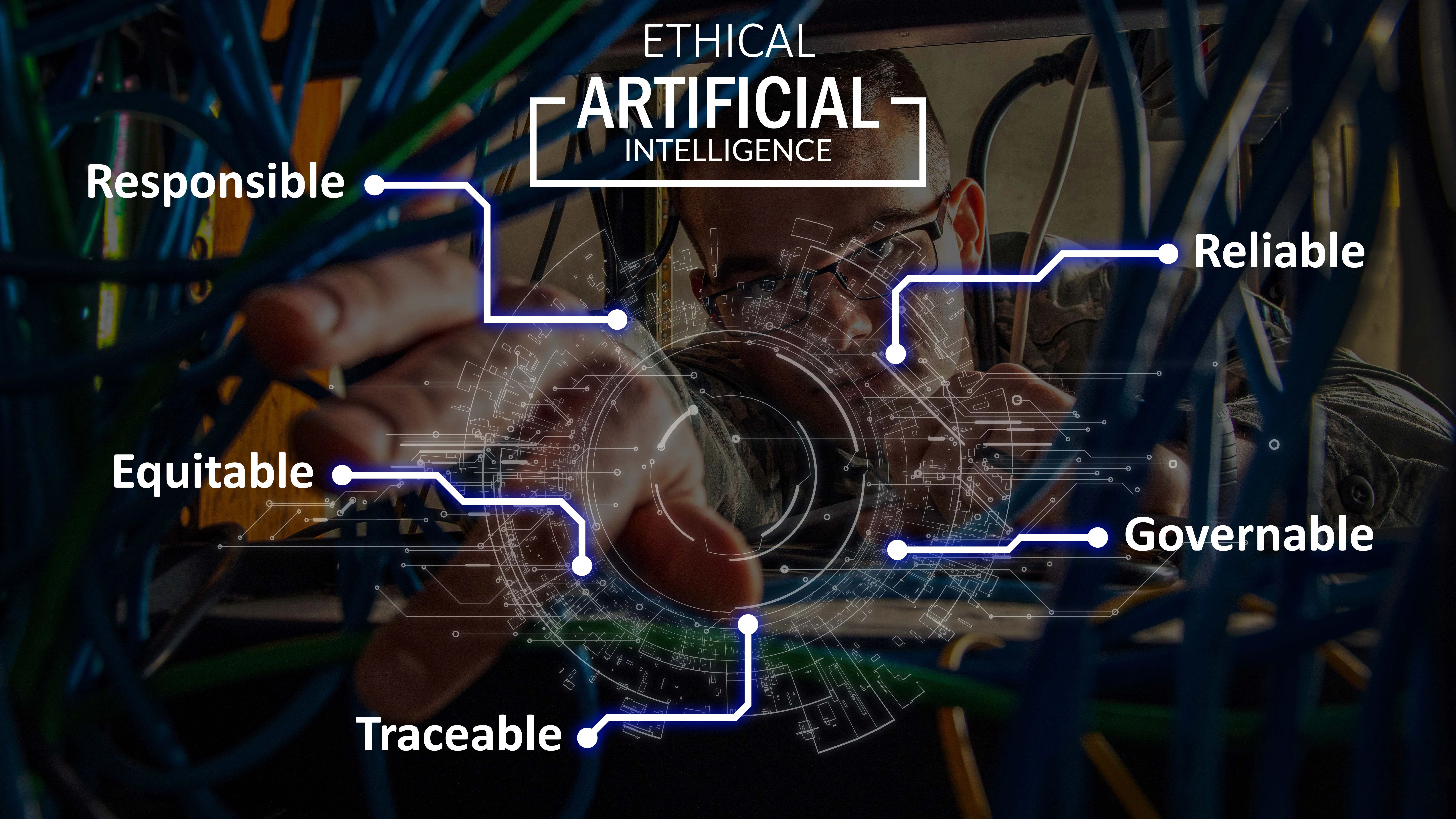
To address AI ethics comprehensively, it is essential to have diverse teams that include ethicists and community representatives. Governance structures, like ethics committees or appointing a Chief Ethics Officer, play a pivotal role in managing AI-related issues and maintaining ethical standards.
The AFPTS framework—encompassing Accountability, Fairness, Privacy, Transparency, and Sustainability—serves as a guide for responsible AI usage. This framework helps in avoiding pitfalls such as bias and loss of trust.
More on ethical AI leadership practices.
Preserving Human Values in AI-Driven Leadership
Leading with AI requires a focus on human values, self-awareness, and moral responsibility, alongside technical expertise. Leaders must possess a comprehensive understanding that extends beyond the technicalities of AI to include ethical and legal concerns, such as privacy and bias.
Building trust with employees, customers, and communities involves deploying AI in ways that respect privacy and fairness while adhering to evolving regulations. Continuous collaboration with experts, including ethicists and sociologists, is crucial to ensure AI aligns with human values and societal norms.

Transparency in AI decision-making processes fosters trust, allowing individuals to evaluate or question AI outcomes. Additionally, systems must be in place to monitor and rectify AI errors or unintended consequences, ensuring organizational integrity and reinforcing human oversight.
Learn more about maintaining the human element in AI leadership.
The Future of AI in Leadership Skills Development
AI Tools and Innovations in Leadership Skills
Leadership skills are evolving rapidly with the integration of AI technology. A significant trend is the use of AI tools to create real-life scenarios. These simulations allow leaders to practice and refine their skills without any real-world risks. By simulating complex situations, leaders can enhance their decision-making and critical thinking—essential skills for managing hybrid teams.

AI also plays a crucial role in strategic planning through predictive analytics and trend analysis, enabling leaders to stay ahead of market changes and technological shifts.
Another exciting development is AI-driven coaching platforms. These platforms analyze leaders' communication styles, emotional cues, and decision-making patterns to provide tailored leadership development. This personalized approach accelerates learning and fosters a flexible, resilient team. Moreover, AI-first leadership emphasizes rethinking the collaboration between humans and AI, focusing on AI skills to maintain a competitive edge.
AI Integration in Organizational Strategy and Leadership
For AI to be effective in leadership development, organizations must establish a clear strategy and ensure active executive involvement. Leaders should cultivate skills in digital literacy, emotional intelligence, adaptability, inclusivity, and strategic thinking to succeed in AI-centric work environments. When executives embrace AI in leadership, they can drive technological change more effectively, often leading to enhanced revenue growth. Keeping leaders updated with AI advancements through webinars, workshops, and online courses is essential.
Midlevel leaders play a pivotal role in integrating AI into team processes and promoting an AI-first mindset. AI assists in identifying skill gaps, customizing learning paths, predicting workforce needs, and reducing bias, all of which contribute to improved talent management and leadership development.
Explore the role of AI in leadership skills and how AI-driven coaching platforms are transforming leadership development.
FAQs
Integrating AI in Leadership: How Can Midlevel Leaders Benefit?
Midlevel leaders play a crucial role in weaving AI into their routines, team dynamics, and broader processes. This helps push strategy forward and make meaningful changes. They can use AI to make better decisions by tapping into machine learning, predictive models, and real-time data. This boosts planning and business results.
AI also helps leaders by building networks with peers, linking managers with similar challenges, and setting up mentor matches and group chats for shared learning. For instance, a midlevel leader might use AI tools to assess team performance, connect with mentors, and track progress in developing leadership skills, allowing them to tweak coaching strategies as needed.
AI lets leaders track their growth in real time by measuring skills, feedback, and peer recognition. This keeps development on course and shows its worth. In fields like healthcare, leaders can use AI in decision-making to improve efficiency, fairness, and cut down on bias, as explained in this article.

Key Stages for Building AI-First Leadership Skills
Building AI-first leadership skills involves a few key steps. First, leaders need to get a solid grasp of AI basics and develop an AI-focused mindset. This foundation helps them ask smart questions about AI strategy, spot competitive opportunities, and handle ethical and operational risks well. Companies should support structured learning paths for leaders to bridge tech skills and strategic goals, as suggested by Harvard Business Review.
Next, sharpening AI-specific skills is vital. Leadership programs can benefit from AI by offering scalable social learning, flexible content delivery, and more time for reflection and application. Building AI-first skills also means encouraging critical thinking, cultural awareness, and ethical reasoning to use AI tools responsibly. Finally, leaders must confidently weave AI into strategic decisions, as outlined in this guide.
Reducing Bias and Inefficiencies in Leadership with AI
AI cuts down on biases and inefficiencies in leadership growth by promoting data-driven decisions, moving beyond just gut feelings. This helps reduce human bias in leadership choices. AI makes leadership development more accessible by scaling personalized learning and linking leaders with the right peers and mentors. AI tools offer real-time feedback and track progress, boosting the efficiency and impact of leadership programs.

However, AI can also reinforce biases and spread false information if not managed well. So, ethical oversight and critical thinking are key. Leaders using AI tools can lower risks and ethical issues by knowing AI’s limits and encouraging responsible innovation, as discussed in this article.