
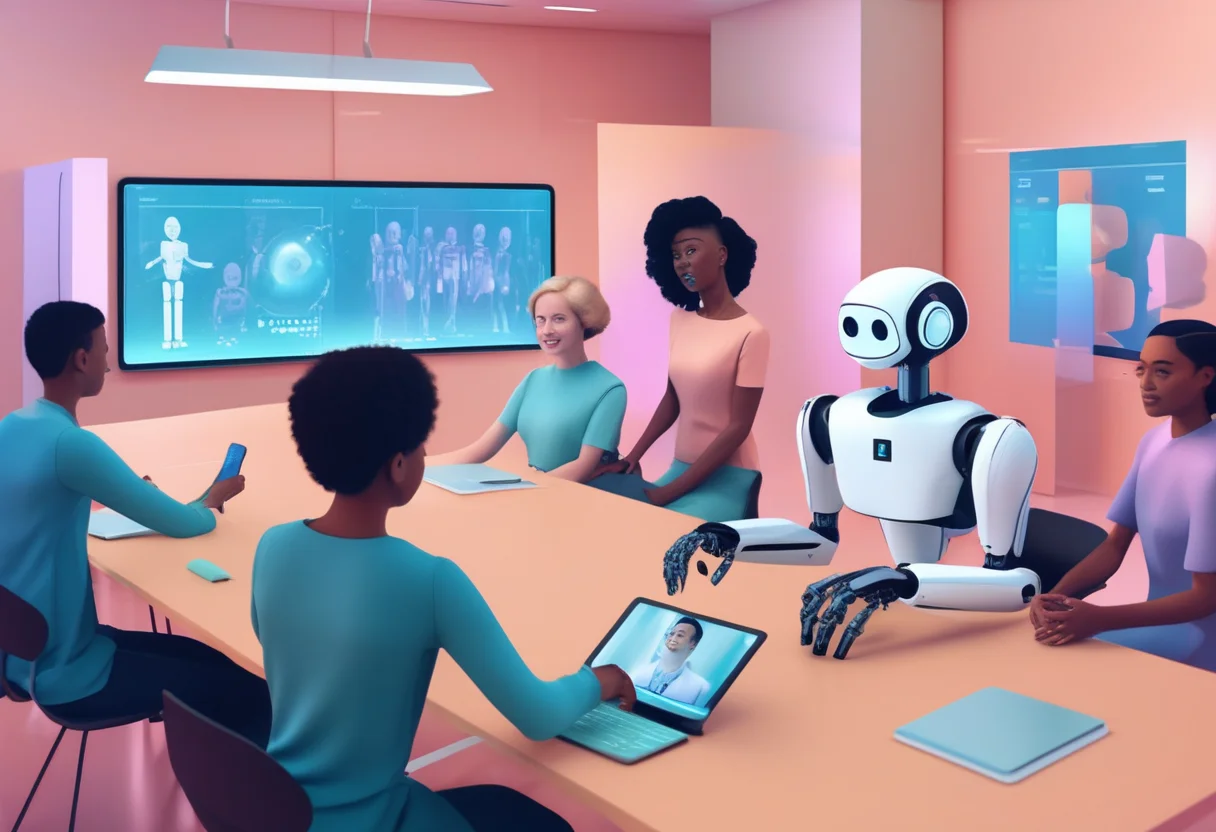
Effective communication is key, and AI is changing the game in how we improve this skill. It's interesting that while 75% of employers see teamwork and collaboration as very important, only 18% of employees get communication feedback during reviews. That's where AI comes in, offering new ways to boost communication skills. From personalized feedback to real-time language processing, AI is changing how we interact at work and in our personal lives. In this article, we'll look at how AI helps improve communication skills, show you steps to make the most of it, and check out some cool tools that can boost your communication abilities. Whether you're experienced or just starting out, let's explore how AI can enhance your communication journey!
Understanding the Role of AI in Communication Skill Enhancement
AI's Impact on Improving Communication Skills
AI tools, like ChatGPT, are designed to mimic real conversations. These tools assist in expressing your thoughts more clearly and enhance dialogue skills through regular practice and feedback.
Virtual meeting platforms powered by AI can:
- Analyze your voice tone
- Assess clarity of speech
- Evaluate non-verbal cues
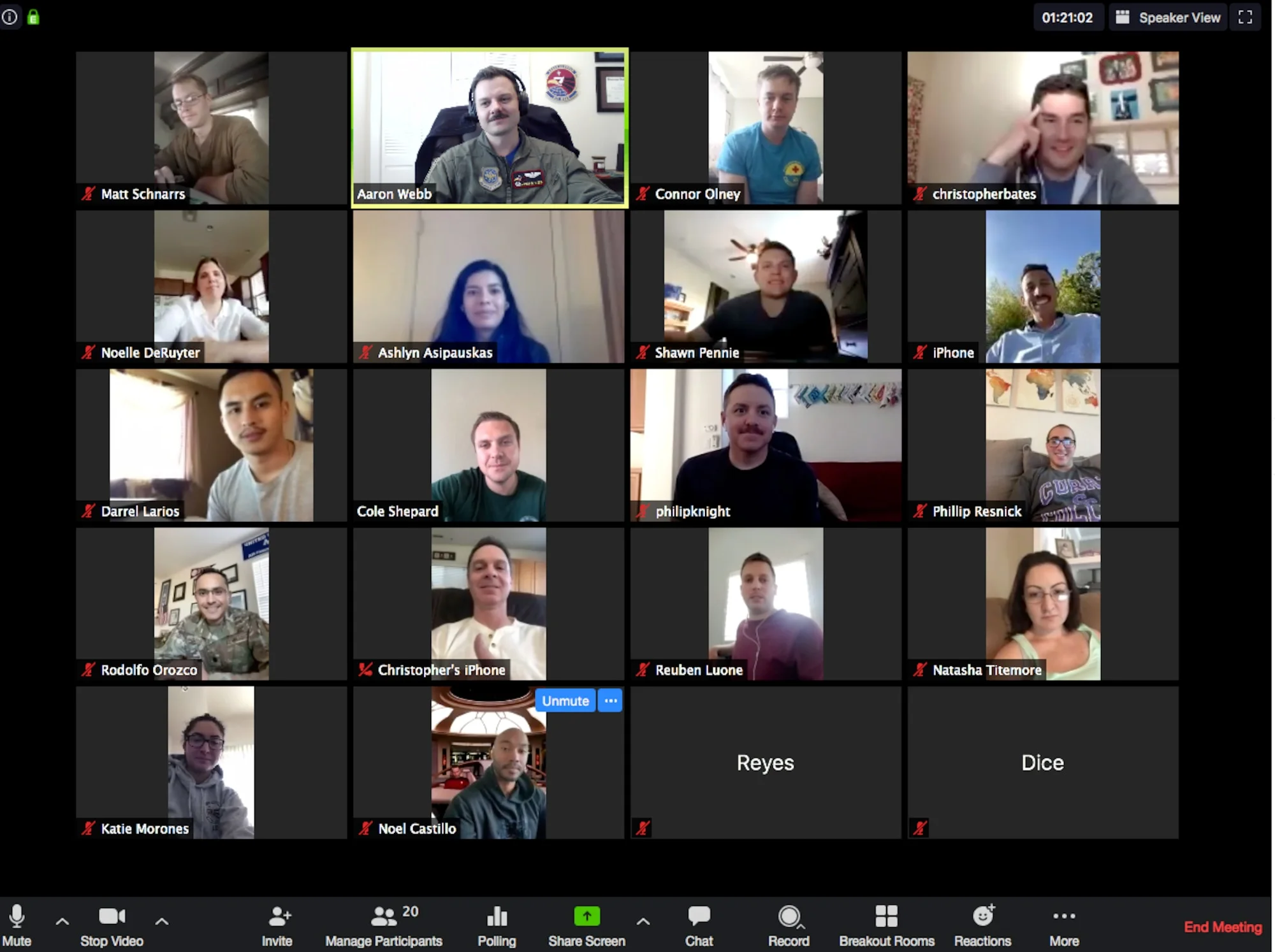
This feedback is invaluable in helping you speak more confidently and stay engaged. Moreover, AI facilitates breaking down language and cultural barriers with real-time translation and smart processing, making global communication smoother. Additionally, AI can manage transcription, summarization, and conversation analysis, enabling you to keep track of key points and respond thoughtfully in various situations.
Overcoming Communication Challenges with AI
Many people struggle to articulate complex ideas clearly. AI tools can assist by encouraging simplification and better expression through guided prompts and practice.
Listening Skills Enhancement: Often overlooked, listening is crucial. AI tools can analyze speech patterns to identify missed points or interruptions and provide summaries to enhance understanding.
Interpreting Non-Verbal Cues with AI: Assessing body language and facial expressions can be challenging alone. AI platforms offer insights into these cues during virtual interactions, making communication more effective.

Tackling Language Barriers with AI Solutions: Language and cultural differences can pose significant challenges. AI translation and language learning apps provide real-time, context-aware translations to help overcome these obstacles.
Step-by-Step Guide to Using AI for Communication Improvement
Define AI-Driven Communication Objectives
Identify Key Areas for Communication Improvement with AI
To enhance your communication with AI, begin by identifying the specific areas you wish to improve. Consider aspects like public speaking, writing clearer emails, or increasing empathy. Knowing what you want to work on allows you to select the right AI tools and strategies.
- Evaluate your communication skills: Review past conversations, seek feedback from friends or coworkers, or use online assessments.
- Document strengths and weaknesses: Write them down to guide your AI use, ensuring your goals are clear and reachable.

Establish SMART Goals for AI Communication Enhancement
Once you have identified your communication goals, establish specific targets for AI assistance. Ensure your goals are SMART: Specific, Measurable, Achievable, Relevant, and Time-bound.
- Example: If you aim to improve public speaking, a SMART goal could be: "Use an AI tool to cut filler words by 50% in my talks over the next three months."
Clear goals provide direction and enable you to track progress, helping you choose the right AI tools. For more tips, visit We Are Tech Women.
Gather Relevant Communication Data
Compile Communication Data for AI Analysis
To leverage AI effectively, gather relevant data such as emails, chat logs, and feedback. This data provides AI with the context needed for personalized improvements.
- Start by collecting samples: Gather communication data like emails from the past month or feedback from colleagues. Ensure sensitive info is anonymized to maintain privacy.
Contextualize Data for Effective AI Communication Analysis
Once you have your data, provide AI with the necessary context for analysis. Explain the data's purpose and any background information that might influence communication patterns.
- Example: If analyzing emails, specify whether they are formal or casual.
Context helps AI understand your communication style and environment, leading to deeper insights.
Create Clear and Specific AI Prompts
Craft Precise AI Prompts for Communication Enhancement
When using AI, clear prompts are essential. They guide AI on what you want to achieve.
- Example: If improving email writing, prompt with: "Check this email for tone and clarity, and suggest changes."
Provide Essential Details for Accurate AI Feedback
Along with clear prompts, provide important information AI needs for accurate feedback. This may include audience, purpose, or specific concerns.
- Example: For presentation feedback, mention the audience's background and goals.
This helps AI tailor its advice, making it more relevant.
Leverage AI Tools for Analysis and Insights
Utilize AI for Communication Pattern and Sentiment Analysis
AI tools can analyze communication patterns, sentiment, and engagement. Using natural language processing, AI can assess tone, clarity, and effectiveness.
- Sentiment analysis helps you understand how others perceive your communication. AI can highlight aspects like harsh emails or low-energy presentations.
Detect Communication Bottlenecks and Gaps with AI
AI analysis can identify communication bottlenecks or gaps, such as misunderstood emails needing clarity improvement.
- Actionable insights: Use AI insights to decide where to focus and what changes to make for impactful improvements.
Use AI for Personalized Communication Guidance
Receive Customized Communication Advice from AI
AI can provide personalized advice based on personality assessments, revealing your style, preferences, and growth areas.
- Example: For introverts, AI might suggest being more assertive in groups; for extroverts, it might recommend improving listening skills.
Enhance Interpersonal Communication with AI Insights
AI can help enhance interactions by analyzing sentiment and feedback, suggesting adjustments in tone or approach.
- Example: AI might recommend using inclusive language or asking open-ended questions to build stronger relationships.
Implement AI-Driven Automation and Translation
Enhance Customer Service with AI Chatbots
AI-driven automation enhances communication efficiency, particularly in customer service. AI chatbots can handle common queries and assist with troubleshooting.
- Benefit: Automating routine tasks frees up humans for complex issues, improving response times and customer experience. Explore more at New Horizons.
Utilize AI Translation Tools for Multilingual Communication
AI translation tools can overcome language barriers by providing real-time translations.
- Application: These tools facilitate multilingual meetings, ensuring inclusivity and effective communication.
Test and Refine AI Interactions
Iteratively Test AI Communication Strategies
To optimize AI use, test and refine your strategies. Experiment with different approaches and adjust based on feedback.
- Example: Test various email templates for positive responses or chatbot scripts for issue resolution effectiveness.
Continuous testing ensures your strategies remain effective. For more on AI communication skills, visit Promptsty.
Refine Communication Approaches Using AI Outputs
Review AI outputs to improve communication. Adjust language for clarity based on AI feedback.
- Data-driven refinement ensures your strategies are effective.
Incorporate Machine Learning for Continuous Improvement
Apply Reinforcement Learning for AI Communication Tools
Machine learning, especially reinforcement learning, facilitates continuous improvement. AI learns from feedback to enhance performance over time.
- Example: A chatbot using reinforcement learning improves through customer interaction experiences.
Learn more about AI tools at Hyperspace.

Enhance Communication Strategies with AI Feedback
Feedback is crucial for improvement. AI helps collect and analyze it to identify areas for adjustment.
- Example: If a strategy isn't working, refine it to better suit your audience.
Monitor and Optimize Communication Flow
Track AI-Derived Communication Insights
Monitoring communication flow is essential. AI can track metrics like response times and sentiment trends.
- Example: Track response times to address delays promptly. Sentiment analysis reveals perception, allowing for necessary adjustments.
For more on AI in communication, visit New Horizons.
Optimize Communication Processes with AI Feedback
Continuous improvement requires regular review of AI insights, adjusting strategies as needed.
- Example: Modify email templates or chatbot scripts based on feedback for better customer satisfaction.
Train and Educate Users on AI Communication Tools
Educate Team Members on AI Communication Tools
To maximize AI's potential in communication, train team members on tool usage, including crafting prompts and interpreting feedback.
- Comprehensive training boosts confidence and capability, covering both technical and strategic applications. For more, visit Promptsty.

Develop Skills in Crafting AI Prompts and Feedback Interpretation
Effective use of AI involves crafting clear prompts and understanding AI insights. Training should focus on these skills.
- User empowerment: Equip users to apply insights for data-driven decisions, enhancing communication improvement.
Step 1: Self-Assessment and Goal Setting for AI Communication
Begin with a self-assessment to identify communication strengths and weaknesses. Use this to set focused goals for AI assistance, ensuring efforts target impactful areas.
Step 2: Utilize AI Tools for Speech Clarity and Public Speaking
Utilize AI tools for speech clarity and public speaking. These tools analyze patterns and suggest improvements, aiding in becoming a more effective speaker.
Step 3: Enhance Listening Skills with AI Feedback
Enhance listening skills with AI tools offering real-time feedback on active listening. These tools help you become a more attentive listener, boosting overall communication.
Step 4: Expand Vocabulary and Language Skills with AI
AI can assist in expanding vocabulary and language skills with personalized recommendations. Use these tools to improve language proficiency and clear communication.
Step 5: Overcome Cultural and Language Barriers with AI Tools
Employ AI-driven translation and cultural analysis tools to overcome language and cultural barriers, aiding navigation in diverse communication environments.
Step 6: Measure and Sustain Communication Improvement with AI
Measure communication improvement over time with AI insights and feedback. Use this data to sustain growth and ensure skills continue to evolve. Regular assessments and adjustments lead to long-term success.
AI Tools to Improve Communication Skills
AI Tools for Specific Communication Skills
AI-Powered Writing Enhancement
Enhance your writing with AI tools that focus on grammar, style, and simplicity:
- Grammarly: Provides real-time grammar, spelling, tone, and style checks, offering feedback to make your messages shine.
- ProWritingAid: Digs deeper into writing style, offering comprehensive insights.
- Hemingway App: Keeps writing simple by highlighting complex sentences.
AI Speech Recognition Tools
Transform spoken words into text with advanced speech recognition tools:
- Otter.ai: Converts meetings into searchable text in real-time, allowing you to focus without taking notes.
- Google's Speech-to-Text API: Supports multiple languages, providing versatile transcription solutions.
- Microsoft Azure's Speech Service: Distinguishes between speakers, simplifying the conversion of speech into text.
AI Language Translation Services
Break language barriers with AI-driven translation services:
- DeepL: Delivers accurate translations with a nuanced understanding of language.
- Google Translate: Offers quick translations across many languages.
- Microsoft Translator: Integrates with various apps, facilitating multilingual communication.
Conversational AI for Better Interactions
Elevate digital interactions with conversational AI tools:
- ChatGPT: Manages communication tasks, content creation, and customer service chats.
- IBM Watson Assistant: Allows customization of conversations for tailored interactions.
- Rasa: Designs chatbots that understand context, making digital chats feel more personal.

These AI tools enhance communication across different domains, ensuring efficiency and personalization in digital interactions.
FAQs
How Can AI Tools Improve Confidence in Public Speaking?
AI tools for public speaking allow you to practice your speeches with a virtual audience, creating a low-pressure environment ideal for building confidence. These tools analyze your speech patterns—such as rhythm and tone—and provide feedback to enhance clarity and engagement. They also track your progress, encouraging consistent practice and gradually reducing speaking anxiety. For instance, using an AI public speaking coach app can offer instant feedback on eye contact, pacing, and filler words.

Best AI Tools for Enhancing Vocabulary and Language Skills
AI language platforms use sophisticated algorithms to tailor vocabulary exercises to your learning level and speed. Tools like AI chatbots and writing assistants provide real-time suggestions for word choice and usage, enhancing your language skills. Many AI apps incorporate game-like features to make learning enjoyable. An example is an AI writing assistant that suggests synonyms and identifies repetitive words.

Personalized Feedback on Communication Skills Using AI
AI evaluates your communication style—considering tone, speed, body language, and word choice—to deliver detailed feedback. These tools create feedback loops to help you understand how others perceive your messages and identify areas for improvement. AI monitors your progress over time, offering exercises and tips tailored to your communication style. An example is an AI communication coach that records your speech and provides a comprehensive report with personalized advice.