

AI is changing how we talk to each other, especially across different countries. By 2025, it's expected to handle 95% of customer interactions. That's a big deal! It shows how much AI is changing global communication. It's making it easier to share information, connect different cultures, and work together internationally. Think about real-time translation tools that help us understand different languages or AI chatbots that offer customer service anytime. These tools open up so many possibilities. But what does this mean for the future of global communication? In this article, we'll look at the key AI technologies that are changing how we connect. We'll also explore their practical uses and think about the benefits, challenges, and ethical questions they bring. And we'll check out future trends and innovations that might change how we communicate worldwide. Let's dive into how AI is not just shaping but really changing the future of global communication!
Summary: Dieser Artikel beschreibt die Rolle von KI-Technologien bei der Umgestaltung der globalen Kommunikation, untersucht ihre praktischen Anwendungen, Vorteile, Herausforderungen und ethischen Überlegungen sowie zukünftige Trends und Innovationen.
Understanding Global Communication in the Age of AI
Evolution of Global Communication: From Basics to AI Integration
Global communication has significantly evolved from simple message exchanges to intricate, multi-channel interactions. This evolution emphasizes speed, quality, and emotional connections to foster trust. The rise of hybrid work models and digital tools has transformed internal communication, promoting genuine collaboration across teams and locations.
Modern global communication aims to dismantle barriers, making content relatable through formats like audio and video. It also emphasizes inclusivity, considering diverse cultures and languages. As audience expectations and digital platforms rapidly evolve, companies must remain agile, investing in the right tools, skills, and personnel.
Communication professionals are no longer mere message senders. They are connection creators, culture shapers, and collaboration enhancers—integral to a positive employee experience and organizational success. For example, a multinational company might employ AI-driven platforms to facilitate seamless teamwork and culturally respectful communication, inspiring innovation.

The Impact of AI on Global Communication
AI is revolutionizing communication by personalizing customer interactions. It customizes messages based on preferences and behaviors across various channels. AI chatbots and virtual assistants, such as those in customer service, provide 24/7 assistance, handling straightforward inquiries so human agents can address more complex issues, thereby enhancing customer service.
AI also anticipates customer needs, resolving potential issues preemptively to build stronger relationships. It leverages data to identify trends, refine communication strategies, and improve business outcomes. Balancing AI's efficiency with a human touch is crucial for maintaining trust and satisfaction.

AI transforms communication from a technical task to an innovation catalyst, particularly in hybrid work environments. It ensures seamless experiences across channels and enhances predictive analytics to prevent problems before they arise. Examples include AI assistants like Siri and Alexa, enabling hands-free communication, setting reminders, making calls, and providing instant language translation.
For more insights on how AI is reshaping global communication, visit the Economic Times.
Key AI Technologies Revolutionizing Global Communication
AI Language Translation Tools for Global Communication
AI language translation tools, such as neural machine translation (NMT) and large language models (LLMs), have become essential for fast and accurate multilingual communication. These technologies enable businesses to localize content at scale, significantly reducing the need for manual translation.
For instance, a fashion company employed AI translation and experienced a 55% reduction in post-editing tasks, achieving perfect quality for short sentences and completing multilingual projects in less than two weeks.

In the realm of video calls, real-time AI translation utilizes automatic speech recognition (ASR), NMT, and text-to-speech (TTS) to instantly convert spoken words into translated speech and captions. This capability facilitates seamless multilingual meetings. The machine translation market is projected to reach $1.58 billion by 2025, underscoring its vital role in global communication.
Chatbots and Virtual Assistants Enhancing Global Communication
AI chatbots and voice assistants, driven by multilingual large language models, are revolutionizing cross-language interactions, enhancing technology's inclusivity and usability. Leading video conferencing platforms like Zoom AI Companion, Google Meet with Gemini, and Microsoft Teams are integrating AI agents. These agents translate, summarize discussions, generate action items, and schedule follow-ups, thereby increasing meeting productivity.
For example, Microsoft Teams leverages AI to retain the speaker's voice and tone while providing real-time translation and meeting summaries, thereby supporting multilingual collaboration.
Automated Transcription and Sentiment Analysis in Global Communication
Advancements in speech recognition technology, powered by natural language processing (NLP), enable real-time transcription and translation of spoken words, streamlining international business communication. AI transcription tools are indispensable in sectors such as e-commerce, education, and healthcare, as they dismantle language barriers and enhance accessibility through precise, real-time voice recognition and translation.
Moreover, AI is increasingly utilized to analyze sentiment and context in communications, aiding businesses in understanding customer feedback and engaging more effectively across languages and cultures. Google's sophisticated voice recognition software transcribes and translates spoken language in real-time during customer service calls, thereby improving multilingual support and sentiment analysis.
The global speech recognition market is anticipated to reach $53.67 billion by 2030, highlighting the significance of voice technology in overcoming language barriers.
Practical Applications and Use Cases of AI in Global Communication
AI Transforming Business Communication
AI is revolutionizing business communication by:
- Automating routine tasks: Streamlining workflows and saving time.
- Tailoring interactions: Personalizing experiences for improved engagement.
- Providing data insights: Enhancing efficiency and teamwork.
Tools such as natural language processing, automated translation, and chatbots are instrumental in bridging language gaps and analyzing sentiment. For example, AI-driven sentiment analysis enables companies to gauge customer satisfaction and refine their communication strategies.
Case in Point: Amazon employs AI to customize customer interactions using real-time data and sentiment analysis, which enhances both engagement and internal communication. Moreover, AI translation technologies, like neural machine translation and large language models, facilitate rapid multilingual content creation. This accelerates global operations and reduces costs.
However, using AI responsibly is crucial to maintaining trust, transparency, and a human touch while benefiting from AI advancements.
Advancements in Personal Communication with AI
AI is enhancing personal communication by:
- Enabling faster responses: Through chatbots and generative AI tools in customer service and personal settings.
- Offering predictive analytics: Anticipating communication needs and helping adjust messaging strategies proactively.
- Breaking language barriers: Providing real-time translation and understanding cultural nuances.
Despite AI's efficiency, maintaining emotional intelligence and a human touch is vital for meaningful personal interactions. OpenAI’s ChatGPT exemplifies this by delivering natural, personalized conversations catering to diverse communication needs.
AI’s Impact on Multilingual and Cross-Cultural Communication
AI-driven language technology is essential for overcoming global communication challenges, facilitating effective interaction across languages and cultures. Given that only about 20% of the world speaks English fluently, AI translation is critical for international business and manufacturing.
AI translation platforms adapt to preferred styles and tones, ensuring brand consistency and cultural relevance in multilingual content. Hybrid AI models, which combine neural machine translation and large language models, improve translation accuracy but require oversight to manage risks like bias and errors.
In manufacturing, Language AI platforms like DeepL enable swift, secure, and precise multilingual communication among teams, partners, and customers, enhancing operational efficiency, quality control, and productivity across global supply chains.
AI-Powered Language Tools: Language translation and interpretation tools are transforming global communication by eliminating language barriers and enabling seamless interaction among people from various linguistic backgrounds. Technologies such as Google’s Neural Machine Translation, DeepL, and Microsoft Translator employ deep learning and natural language processing to deliver accurate, context-aware translations.
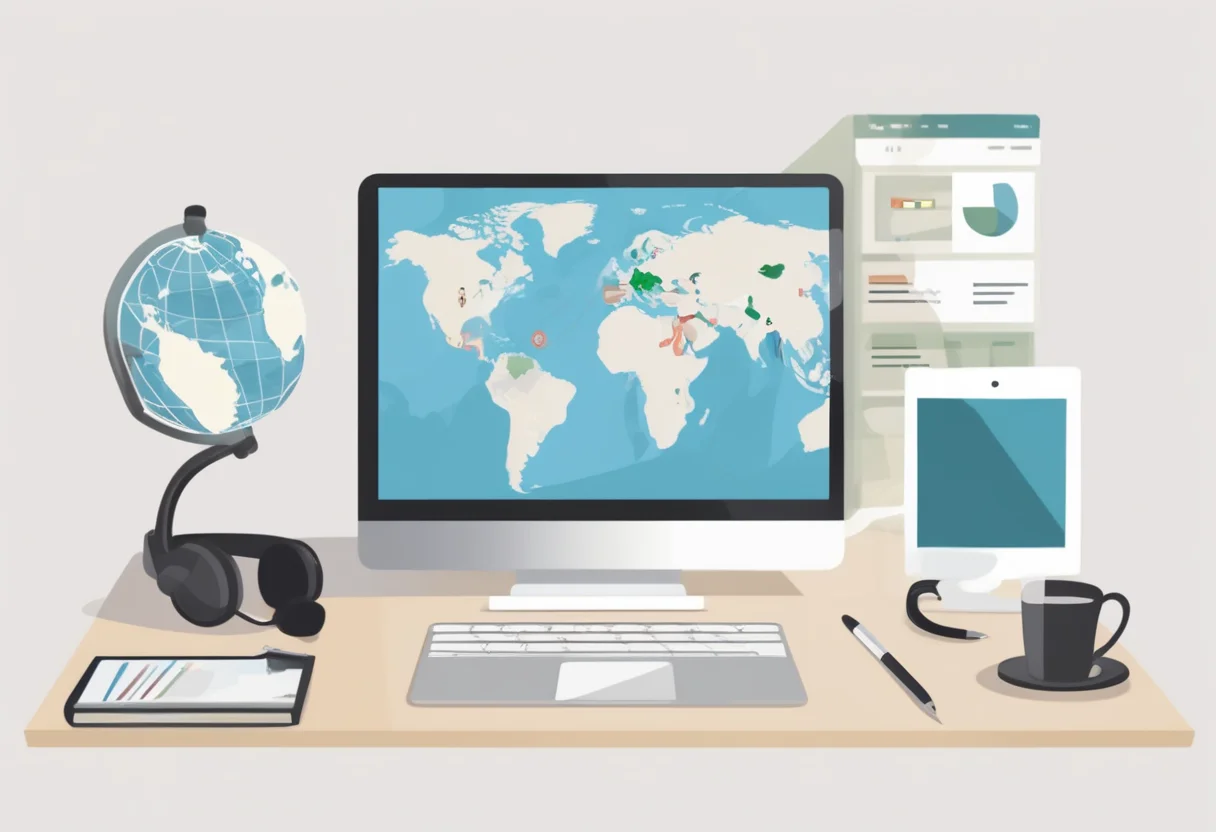
This supports real-time multilingual communication, particularly in international business and travel.
AI Meeting Solutions for Global Communication: Platforms like Transynct AI provide real-time two-way translation with speech playback and subtitles for multilingual meetings, supporting up to 10 languages with low latency. These tools integrate with platforms like Zoom, Microsoft Teams, and Google Meet, facilitating seamless global communication in business negotiations and international sales meetings.
For more insights into how AI enhances business communication, speeds up operations, and maintains trust, explore these resources:
- AI enhances business communication
- AI translation technologies
- Responsible AI use
- Language AI platforms
- AI meeting tools
Benefits of AI-Driven Global Communication
Enhancing Efficiency and Productivity in Global Communication
AI tools, such as chatbots and virtual agents, have significantly enhanced global communication efficiency. These tools manage repetitive tasks, drastically reducing response times and accelerating query resolutions. As a result, humans can concentrate on more complex issues, leading to increased customer satisfaction.
Moreover, AI technologies like natural language processing assist in managing emails by sorting and prioritizing them, ensuring that important messages are not overlooked. Companies like Amazon utilize AI to analyze their internal communications, identify areas for improvement, and streamline operations with fewer disruptions.
Personalization and Customization in Global Communication
AI plays a pivotal role in making global communication feel personal, which is crucial for engaging diverse audiences. By analyzing real-time data, AI can tailor messages and product recommendations based on individual preferences and behaviors. This level of personalization is essential, as most consumers expect brands to provide customized online experiences.
AI systems, such as conversational AI, adapt their responses according to the user's tone and mood, resulting in more engaging and satisfying interactions. In the realm of public health, AI-driven messaging has been instrumental in delivering personal, scalable, and accessible interventions, enhancing outreach efforts. During the COVID-19 pandemic, AI platforms delivered customized health information to various groups, significantly enhancing communication reach and impact.
Leveraging Data-Driven Insights for Global Communication
AI can process vast amounts of communication data, providing organizations with insights into patterns, sentiments, and effective strategies, thus facilitating informed decision-making. Predictive AI models can even anticipate future communication needs and challenges, allowing companies to adjust their strategies proactively.
Studies indicate that AI tools not only enhance user satisfaction but also overcome barriers such as language and time differences. Companies like Google leverage AI to analyze customer engagement data, refining their communication strategies based on these insights. AI tools, including chatbots, sentiment analysis, and voice transcription, are revolutionizing business communication by enabling quicker responses, deeper customer insights, and more effective engagement.
Read more about the benefits of AI in communication.
Explore how AI is transforming communication.
Learn how AI is revolutionizing global communication.
Challenges and Ethical Considerations in Global AI Communication
Ethical Concerns and Trust in Global AI Communication
When it comes to global communication, using AI ethically is crucial. We need to be clear about when people are talking to AI and how AI influences what they see or hear. This kind of openness helps build trust because it lets users see how AI decisions happen.
It's also important to ensure AI doesn't just repeat or worsen societal biases, especially in areas like content suggestions and translations. We need systems in place to take responsibility if AI causes harm or spreads false information. Ethical AI should align with societal expectations by focusing on fairness, openness, and responsibility to avoid issues like data misuse or biased algorithms.

Being transparent means having clear documentation, regular checks, and easy-to-understand information to build trust and meet regulations.
Limitations and Failures in AI-Driven Global Communication
Using AI in journalism and communication reveals some clear challenges. AI can exacerbate biases due to skewed datasets and unclear development processes, which can harm fairness and trust. In journalism, there are concerns about algorithmic bias, data privacy, reliance on big tech, and the spread of misinformation or sensational stories.
Decisions to use AI in communication should be ethically driven, not just motivated by cost-saving or click-chasing. Additionally, generative AI can produce misleading or harmful content, necessitating rules for its responsible use. Without careful oversight, AI-driven news systems might disseminate biased or false information.
Privacy and Security in AI-Powered Global Communication
Implementing AI in communication demands robust privacy and security measures. AI tools must protect user privacy and secure data, especially when dealing with sensitive information. Data breaches or misuse of personal information by AI systems can result in loss of public trust and legal issues.
Ethical AI development involves minimizing the risk of leaking sensitive information and ensuring data is handled securely. Transparency about data usage and accountability is essential to maintaining privacy and security.
AI chatbots in customer service should be upfront about data collection and have strong security measures to protect user information. As AI evolves, balancing technological progress with privacy is vital.
Future Trends and Innovations in AI Communication
Emerging AI Technologies in Global Communication
AI is revolutionizing global communication. The conversational AI market is projected to soar to $14.29 billion by 2025 and $41.39 billion by 2026. This surge is driven by AI agents capable of managing complex tasks with minimal human intervention. These agents are evolving beyond mere assistants to become intelligent collaborators, transforming team dynamics by autonomously managing tasks.

Leading companies like OpenAI and Google are at the forefront, integrating advanced voice features into devices for more natural interactions. Additionally, conversational AI is improving in emotional understanding, enhancing the human-like quality of interactions. For instance, Accenture employs over 50 autonomous AI agents across various departments, exemplifying the business adoption of these technologies.
Security Advancements in AI Communication: Quantum and Blockchain
As AI's role in communication grows, ensuring the security of these interactions becomes paramount. Although specific advancements in quantum and blockchain for 2025 are not detailed, the increasing prevalence of AI agents underscores the necessity for robust cybersecurity and privacy measures. New global AI regulations are emerging to address risks such as disinformation and privacy concerns, indicating heightened oversight in AI communication technologies.

Governments are enacting laws to combat harmful AI applications, like deepfakes, and to regulate AI in sensitive domains, reflecting a commitment to secure AI communications.
Societal Implications of AI on Global Communication
AI tools are reshaping communication by delivering personalized content at scale, enhancing customer experiences, and strengthening brand connections. In crisis scenarios, AI-driven strategies and real-time data empower leaders to craft precise messages. Within organizations, AI is revolutionizing internal communications by extracting insights from employee interactions, fostering inclusivity and responsiveness.
The evolution from generative to cognitive AI signifies a shift where systems now analyze data to inform decisions, predict behaviors, and suggest strategies, significantly impacting communication strategies. PR teams are transitioning from experimenting with AI to leveraging it for precise audience targeting and content creation, accelerating personalized communication across diverse channels.
Explore more about conversational AI trends and AI's impact on communication.
FAQ Section
How AI Calls Revolutionize Global Business Communication
AI calls are revolutionizing business communication by automating routine tasks, which enhances efficiency and reduces the burden on human workers. They manage tasks such as setting appointments and answering basic queries, thereby streamlining operations and minimizing errors. This automation allows businesses to optimize resource utilization and cut costs (source).
Furthermore, AI calls facilitate global communication by overcoming language and cultural barriers. With intelligent translation and adaptable communication techniques, messages are conveyed clearly and effectively to diverse audiences (source).

AI calls also collect and analyze data in real-time, enabling businesses to refine their communication strategies and foster stronger customer connections (source). For instance, a large corporation can deploy AI to provide customer support in multiple languages, customizing scripts to align with local cultures and enhancing customer satisfaction.
Key Benefits of AI in Global Personal Communication
AI enhances personal communication by offering real-time language translation, bridging language and cultural gaps (source). This is particularly valuable in our globalized world, where interactions with people from diverse backgrounds are common.
AI tools also assist with scheduling, reminders, and managing communication, leading to more efficient and organized interactions (source). Additionally, AI-driven platforms can detect tone and sentiment, facilitating more effective and empathetic communication (source).
For example, an AI messaging app might translate messages instantly and suggest culturally appropriate responses, ensuring smooth and meaningful conversations.
Enhancing Customer Service Efficiency with AI in Global Communication
AI enhances customer service efficiency by automating responses to common inquiries through calls or chatbots, reducing wait times and allowing human agents to focus on more complex issues (source). AI can swiftly analyze customer data during interactions, equipping agents with the information needed to resolve problems more quickly and accurately (source).
By integrating AI into global communication strategies, companies can maintain consistent service quality across different markets and languages (source). For example, a global retailer might utilize AI call systems that instantly recognize customer history and preferences, enabling faster and more personalized service.